

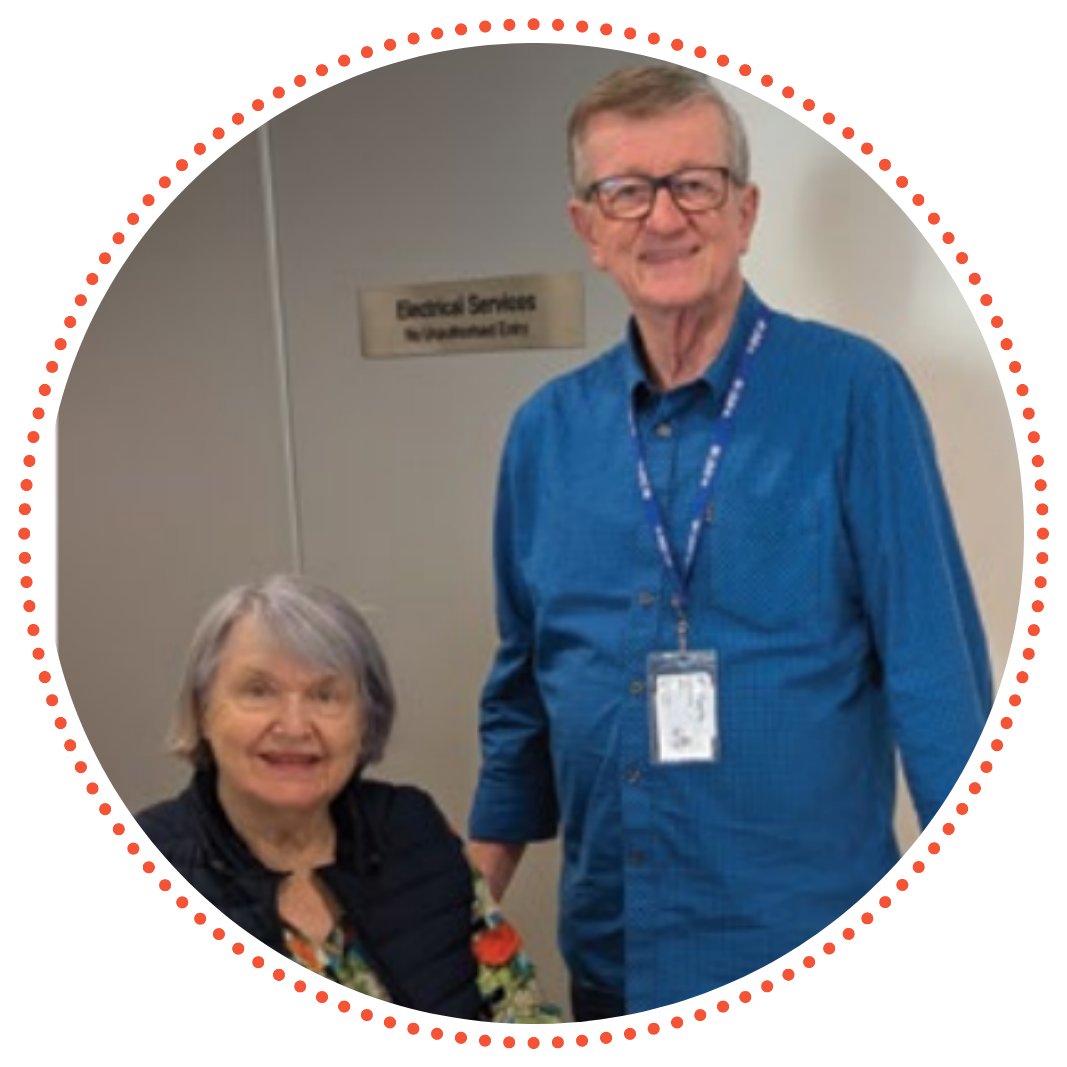
Greg and Phyllis Johnson are a couple who prove that volunteering together can be a meaningful part of life and love. And it’s supporters like you who make their service possible.
For Phyllis, volunteering has always been part of who she is. Growing up in a church community in the 1950s and 60s, giving back was simply what people did.
So when Multiple Sclerosis forced her to retire early from her high school teaching career in 1998, she knew exactly what came next.
She’d heard Lifeline founder Alan Walker’s story and understood his mission. Volunteering for the organisation felt like a natural choice.
Greg came to Lifeline through Phyllis. As a teacher, then deputy, then principal, he was thinking about what retirement might look like. Phyllis was already volunteering, so they talked about it. The idea of serving together appealed to him.
Your support made their training possible. And that training changed more than just their volunteering—it transformed how they live every part of their lives.
For Phyllis, the crisis support training helped her reflect on her life and discover things about herself. The skills she learned—active listening, positive regard, being non-judgemental, empowering people, really listening, not just talking—became essential tools in all her relationships.
Greg was still working at a school when he began his Lifeline training. He found himself appreciating the skills in his pastoral role, discovering a different way of thinking and reflecting that made him much more effective. Learning to help people realise you’ve paid real attention to what they’ve said—that changed everything.
Greg notices how openly suicide is talked about now, and how quickly people share their deepest thoughts once trust is built on the phones. That openness, that willingness to be vulnerable with a stranger—it’s profound.
But this work takes its toll, which is why the support you fund matters so much. Phyllis has learned to leave it behind when she walks away. She trusts that other amazing Crisis Supporters are there answering calls when she’s not.
That trust allows her to feel satisfied at the end of each shift, knowing she’s done what she could.
Greg has a ritual. He tears up his notes and recycles them at the end of every shift. It helps him let go. But there’s more to it than that.
Before they leave, they check in with their supervisor—someone your donations help train and support. If a call is hanging around with either of them, they can ring in and debrief with a clinician. That safety net, that professional support —it’s what makes sustainable volunteering possible.
And they keep coming back.
Phyllis has been volunteering for 40 years. The contacts and connections she’s made over those years have been vital to her. So much so that Greg sees how important the work truly is.
For Greg, it’s simple: you get so much out of giving to others. Knowing you’ve made a difference and helped someone consider life again—that’s everything.
Your support helps make their service possible. The training that equips them. The supervision that sustains them. The infrastructure that connects them to people in crisis. The ongoing support that keeps them healthy and effective.
Greg and Phyllis show up, shift after shift, because you believe this work matters.
And somewhere in Queensland, someone will reach out to Lifeline today. They might connect with Greg or Phyllis—two people who’ve dedicated years to being there in the darkness.
That connection exists because of you.


